
-
 By Admin
 By Admin
 Why Regular Roof Maintenance is Essential for Your Home
Read More


Talk to an Expert (504) 688-3387

Energy-efficient elastomeric roof coatings reflect up to 90% of solar heat, helping New Orleans commercial buildings reduce cooling costs by 15 to 30% during the city’s intense subtropical summers. Big Easy Roof Repairs installs reflective cool roof systems designed for the extreme heat and humidity of the Gulf Coast, protecting flat roofs while lowering HVAC demand year-round.
Table of Contents
New Orleans summers push commercial cooling systems to their limits. With daily highs regularly exceeding 90 degrees Fahrenheit and humidity levels hovering above 75%, the heat index often reaches 105 degrees in July and August. For building owners and property managers across the Greater New Orleans area, these conditions translate into massive energy bills and HVAC systems running nearly 10 to 12 months per year. At Big Easy Roof Repairs, we install reflective elastomeric roof coatings that combat Gulf Coast heat at the source, keeping commercial buildings cooler and cutting energy costs significantly.
This guide explains how energy-efficient elastomeric coatings work, why they deliver exceptional results in the New Orleans subtropical climate, and how to calculate the return on investment for your commercial property.
The combination of extreme UV exposure, sustained high temperatures, and near-constant humidity creates a uniquely punishing environment for commercial roofing systems in Southeast Louisiana. Dark-colored roofs in New Orleans can reach surface temperatures of 150 degrees Fahrenheit or higher during summer, forcing HVAC systems to work overtime just to maintain comfortable indoor conditions.
Unlike drier hot climates, the Gulf Coast’s subtropical humidity means that heat stress on roofing materials is compounded by constant moisture exposure. Standard commercial flat roofs absorb this solar energy and transfer it directly into the building envelope, increasing indoor temperatures and driving up cooling costs throughout the extended warm season.
The urban heat island effect in the New Orleans metro area intensifies these conditions further. Dense commercial corridors with conventional dark roofs trap and re-radiate heat, raising ambient temperatures for entire neighborhoods. Reflective elastomeric coatings directly counter this effect by bouncing solar energy away from the roof surface rather than absorbing it.
High humidity reduces the efficiency of rooftop cooling by slowing the natural dissipation of heat from building surfaces. In New Orleans, where dew point temperatures frequently exceed 70 degrees Fahrenheit during summer months, this moisture-laden air acts as an insulating blanket over conventional roofs.
HVAC systems in humid climates must manage both temperature and moisture, consuming significantly more energy than systems in dry-heat regions. A reflective roof coating reduces the thermal load entering the building, allowing climate control systems to focus more of their capacity on dehumidification rather than simply fighting incoming heat.
Elastomeric coatings reflect 80 to 90% of the sun’s energy, reducing roof surface temperatures by 50 degrees Fahrenheit or more compared to uncoated dark roofs. This dramatic temperature reduction directly translates to lower cooling demand and energy savings of 15 to 30% for commercial buildings in hot climates like New Orleans.

Solar reflectance, also called solar reflectivity, measures how effectively a surface bounces sunlight away rather than absorbing it. High-reflectance elastomeric coatings function like a mirror on your rooftop, sending solar radiation back into the atmosphere before it heats the building underneath.
For New Orleans commercial properties with large flat roof areas, the impact is substantial. A 30,000 square foot warehouse or retail building with a reflective coating may see cooling cost reductions of thousands of dollars per year, particularly given the city’s extended cooling season that stretches from April through November.
Thermal emittance measures how quickly a roof surface releases absorbed heat back into the atmosphere. Elastomeric coatings with high thermal emittance ratings prevent heat from building up on the roof surface, stabilizing interior temperatures and reducing the workload on your HVAC system throughout the day.
Even the most reflective coating absorbs some solar energy. The difference lies in how quickly that absorbed heat dissipates. High-emittance elastomeric coatings radiate stored heat rapidly, preventing it from migrating through the roof deck and into the conditioned space below. In New Orleans, where afternoon thunderstorms can temporarily increase cloud cover before the sun re-emerges, this rapid heat release keeps roof temperatures consistent rather than allowing heat to accumulate.
The combination of high solar reflectance and high thermal emittance is what earns a coating its cool roof rating, a designation that the Department of Energy and Energy Star use to identify roofing products that deliver meaningful energy savings.
Elastomeric coatings form a continuous, seamless membrane across the entire roof surface, eliminating the joints, seams, and gaps where water infiltration typically begins. This watertight barrier is especially valuable in New Orleans, where annual rainfall averages over 60 inches and severe storms can drop several inches in a single afternoon.
The flexibility of elastomeric coatings allows them to expand and contract with temperature fluctuations without cracking or pulling away from the substrate. In the Gulf Coast climate, where a roof may experience a 60-degree temperature swing between a cool morning and a blazing afternoon, this elasticity prevents the stress fractures that plague rigid roofing membranes.
By combining energy efficiency with waterproofing performance, elastomeric coatings address two of the biggest concerns for commercial roofing in New Orleans: keeping heat out and keeping water out.
Commercial buildings in hot, humid climates like New Orleans can save 15 to 30% on annual cooling costs after applying a reflective elastomeric coating. For a mid-sized commercial property, these savings can amount to several thousand dollars per year, with the coating paying for itself within two to four years in most cases.
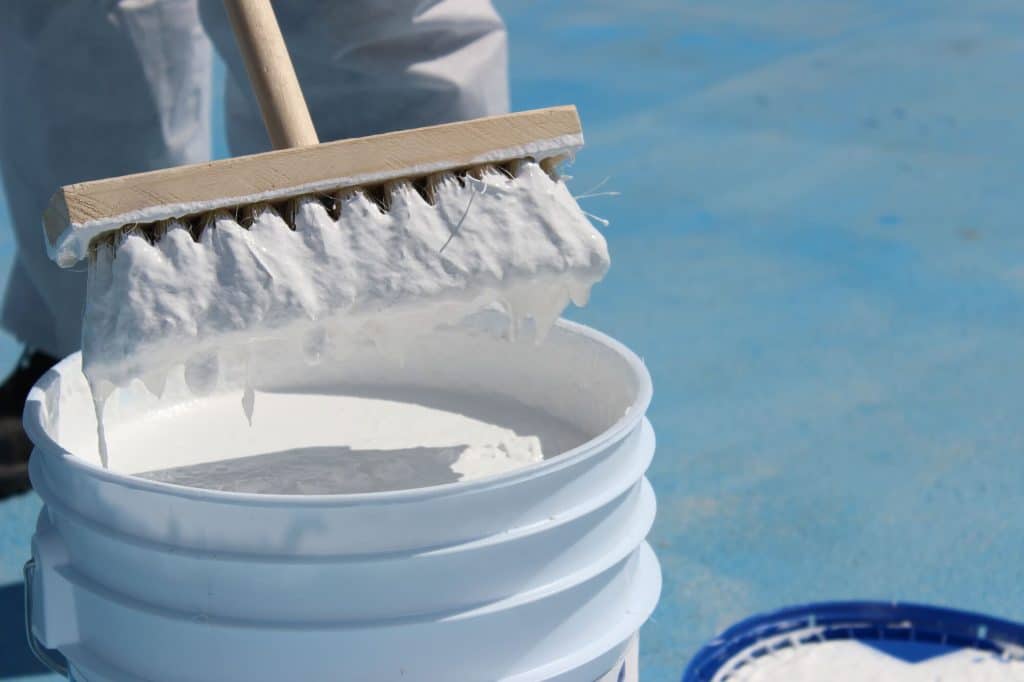
The savings potential is amplified in New Orleans compared to cities with shorter cooling seasons. Because commercial HVAC systems in Southeast Louisiana run nearly year-round, the cumulative energy reduction from a reflective coating delivers returns month after month. The EPA estimates that cool roofing delivers average yearly net savings of nearly 50 cents per square foot compared to standard roofing, even when accounting for material costs.
On a 30,000 square foot commercial roof, that translates to roughly $9,000 to $12,000 in savings over the coating’s lifespan, not including the avoided costs of deferred roof replacement.
By shielding the underlying roof membrane from UV radiation, thermal cycling, and moisture damage, elastomeric coatings reduce the frequency of repairs and extend the intervals between scheduled maintenance. Building owners in New Orleans benefit from fewer emergency repair calls related to heat damage and storm-related wear.
The coating acts as a sacrificial layer that absorbs the environmental punishment that would otherwise degrade the primary roofing membrane. In the Gulf Coast environment, where UV exposure and rainfall are both above national averages, this added protection significantly reduces material degradation over time.
A properly applied elastomeric coating can extend the functional life of a commercial roof by 5 to 10 years, with some high-quality systems lasting up to 25 years. This allows building owners to defer the significant capital expense of a full tear-off and replacement while maintaining reliable roof performance.
For New Orleans property managers operating multiple buildings, the ability to stagger roof replacements through strategic coating applications can make a significant difference in long-term capital planning. The coating preserves the existing built-up roofing system or single-ply membrane underneath, protecting it from the elements while buying time before a full replacement becomes necessary.
Federal tax credits and local utility rebates for energy-efficient building improvements can apply to qualifying cool roof installations. Louisiana commercial property owners should check current federal energy efficiency tax credits and contact their utility provider about available rebate programs to maximize the financial return on a reflective coating.
Tools like the Department of Energy’s Cool Roof Savings Calculator can help quantify the projected savings for your specific building size, location, and current energy costs. Combined with available incentives, the ROI on an elastomeric coating installation often exceeds initial projections.
Silicone-based elastomeric coatings perform exceptionally well in New Orleans due to their resistance to ponding water, a common issue on flat commercial roofs in a city that receives over 60 inches of rain annually. Acrylic coatings offer excellent reflectivity and UV resistance for roofs with proper drainage.
The choice between coating types depends on your roof’s slope, drainage characteristics, and existing membrane material. Silicone coatings maintain their reflective properties even after prolonged water exposure, making them ideal for low-slope commercial roofs where standing water is difficult to eliminate entirely. Acrylic coatings, while less tolerant of ponding water, deliver superior solar reflectance values and tend to be more cost-effective for well-drained roof systems.
Your elastomeric roof coating should be selected based on a thorough roof inspection that evaluates the current membrane condition, drainage patterns, and structural considerations specific to your building.
Yes. Elastomeric coatings perform best when applied to structurally sound roofs with minimal existing damage. Significant membrane deterioration, active leaks, or saturated insulation must be addressed through repairs before a coating can deliver its full energy-saving and waterproofing benefits.
A pre-application roof inspection identifies any repairs needed to prepare the surface. Proper preparation ensures adhesion, prevents trapped moisture from causing problems beneath the coating, and allows the coating system to achieve its rated lifespan.
If your New Orleans commercial building experiences any of the following conditions, it may be time to consider a reflective elastomeric coating:
A qualified roofing contractor can evaluate whether your roof is a good candidate for an elastomeric coating or whether roof replacement is the more cost-effective long-term solution. In many cases, a coating can restore performance and add years of service life at a fraction of the replacement cost.
New Orleans commercial buildings face some of the highest cooling demands in the country. Reflective elastomeric coatings offer a proven, cost-effective way to reduce that burden while extending the life of your existing roof. Big Easy Roof Repairs provides energy-efficient coating installations for commercial properties throughout the Greater New Orleans area.
We serve New Orleans, Baton Rouge, Gretna, Hammond, Covington, and throughout Louisiana and Florida.
Call us at (504) 688-3387 or request a free roof assessment to find out how much a reflective coating can save your building this summer.
Most elastomeric coatings last 10 to 15 years in the Gulf Coast climate, with premium silicone formulations lasting up to 25 years. Longevity depends on proper surface preparation, coating thickness, and the quality of the product used.
Yes, elastomeric coatings can be applied directly over most existing commercial roof membranes, including TPO, EPDM, modified bitumen, and metal. The existing roof must be in sound structural condition with no active leaks or saturated insulation.
Reflective coatings are highly effective in humid climates like New Orleans because they reduce the thermal load on HVAC systems, allowing the equipment to dedicate more capacity to dehumidification. The energy savings in subtropical climates often exceed those seen in dry-heat regions.
Most building owners notice reduced cooling costs within the first billing cycle after application. The greatest savings occur during the hottest months, typically June through September in New Orleans.

Location New Orleans, LA

Phone No. 504-688-3387

Working Hours
Mon - Fri: 8:00 am - 5:00 pm
Sat - Sun: Closed